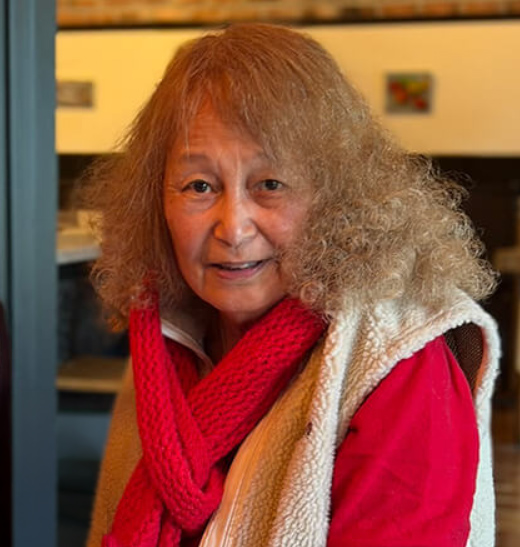
After suffering a stroke in 2021, Lourdes spent years fighting to regain not just movement, but the life she loved. Through persistence, self-advocacy, and reconnecting with the places and passions that defined her, she slowly recaptured her independence.
Before my stroke in 2021, I spent much of my time outdoors: enjoying time with friends, practicing photography, and sketching waves out in Pacific Grove. On one of those ordinary afternoons at Shoreline Park, I began to feel dizzy and suddenly lost my balance.
The next thing I remembered was waking up at Stanford Hospital, with no recollection of what had happened or how I had gotten there.
The following week was spent in the ICU. I slept constantly and felt fatigued whenever I was awake. Although my stroke left me with only mild aphasia and I could still communicate, I initially believed it was something I would simply “get over.” I soon realized that recovery would be a much longer process than I had expected.
Recovery became a fight, not only to survive, but navigate the system.
I found myself writing letters to doctors, advocating for continued care, and fighting to re-enter daily therapy after initially leaving the rehabilitation system. I struggled to remember passwords and account information, making insurance claims and everyday finances increasingly overwhelming. Access to occupational therapy was limited, and after an unsuccessful experience locally, I eventually found a therapist in Santa Clara.
There I heard something that would completely change my outlook: “We can wake it up.”
At that moment I cried. For the first time since my stroke, progress forward towards recovery felt within reach. From there on, I shifted my focus towards therapy that was meaningful to me. I requested golf clubs, instead of therapy sticks, to practice swinging and felt a tangible sense of accomplishment as I regained my mobility. Every successful swing brought me closer to reclaiming something that I loved.
At the time I was staying with my boyfriend in Morgan Hill, where the steep hills made walking difficult and left me relying on rides to get around. That was until one day I got back behind the wheel and drove myself again. Seeing the Mountain View sign for the first time since my stroke from behind the wheel, I felt an indescribable feeling of accomplishment and happiness. Not just because I was driving. But because I had returned home.
I was recapturing the things I loved.
The following period of time was marked by not only countless hours of massage and physical therapy, but by those who looked out for me. My boyfriend would sneak me ice when I desperately wanted water but couldn’t safely swallow. My “right hand,” Gina, made countless calls on my behalf to family and friends. Childhood friends went out of their way to still include me in their plans. My son sent me care packages throughout my recovery. And my physical therapists, who were all incredibly kind.
Recapturing what I loved became what kept me pushing forward.
One such place was Filoli House & Garden, a beautiful expanse of flowers and country house. Prior to my stroke, this was a place I loved to visit but given that it was quite a drive and required lots of walking, it was something that I had to work up to.
So I worked toward it. Step by step.
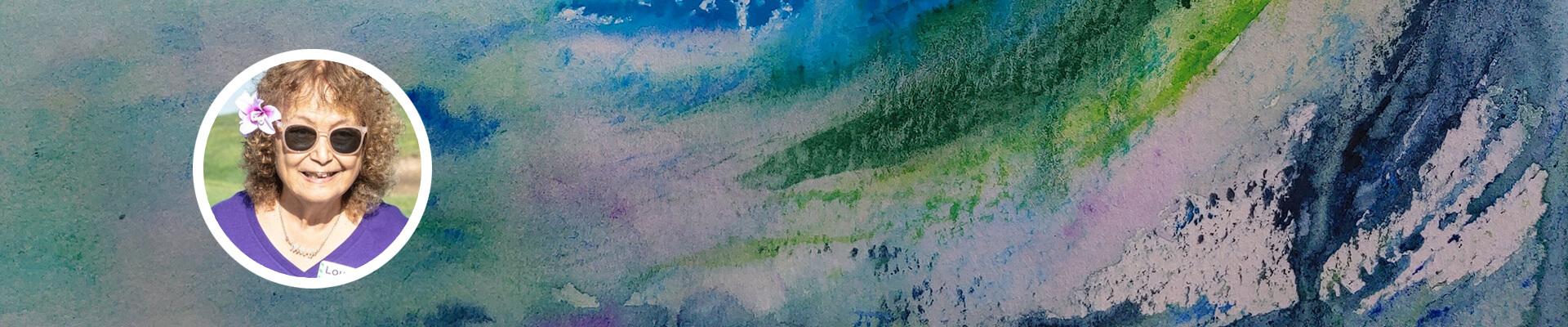
Eventually, I returned. However it wasn’t simply to visit, but to photograph, sketch, paint, and once again participate in the community that had brought me so much peace before my stroke. My philosophy has turned into: “Now what can you do?”
Now, I help encourage other stroke survivors to continue pursuing the things that they love, pushing them to engage in various stroke survivor groups and inviting people to join me at various paint therapy sessions.
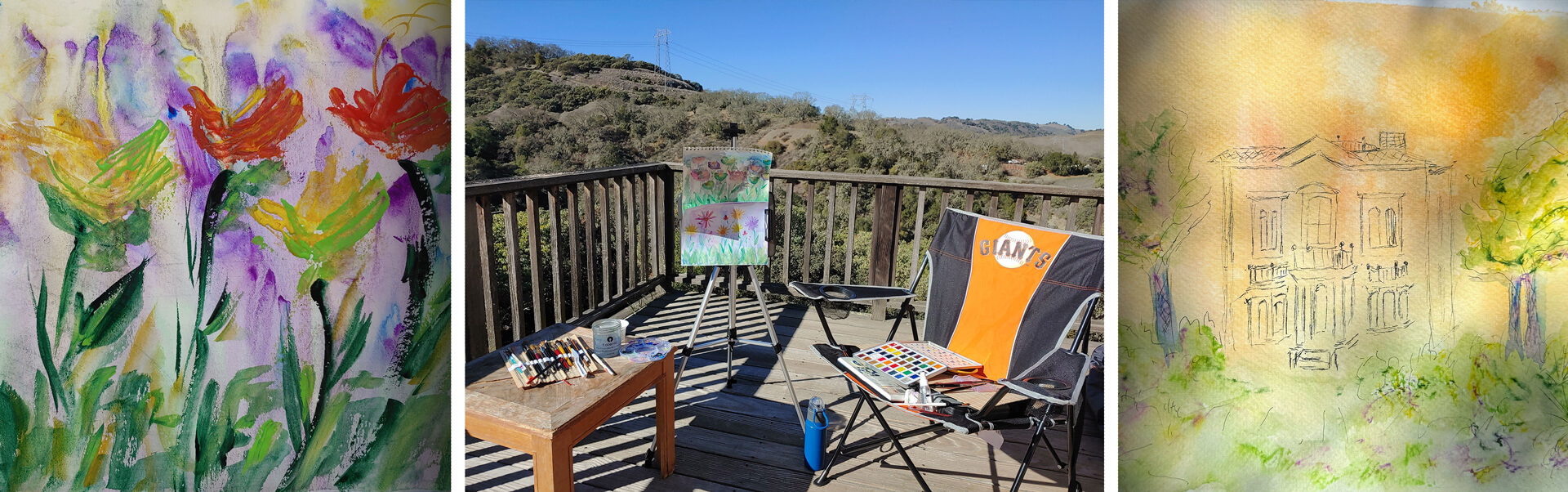
To me, recovery isn’t about returning to who you were, but continuing forward with the hobbies, people, experiences and people that you love. I believe this is what helped me survive my stroke, and carried me through my recovery.
“You have to make those little steps down the path.”